 Flat Clearance Kensington — Recycling and Sustainability
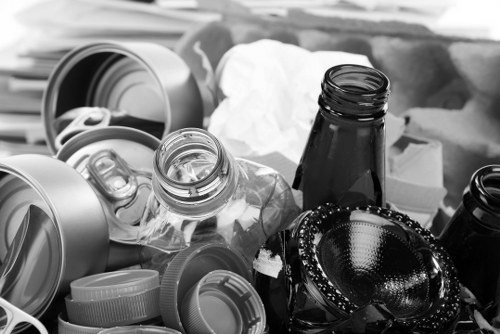
Flat Clearance Kensington has developed a clear, ambitious plan to make every flat clearance in the borough an example of eco-friendly waste disposal and a model for a sustainable rubbish area. We treat material recovery and reuse as core service components: from careful sorting on site to directing items to reuse charities and specialised recycling streams. Our commitment is to reduce landfill dependency while maximising local reprocessing and donation flows.
Our approach is practical and measurable. We adopt clear segregation at source, trained teams to sort items during flat clearances, and a transparent reporting system that tracks diversion rates. This is not lip service: we publish internal targets and operational benchmarks so every clearance stays aligned with borough expectations and environmental best practice.
![A close-up image of crumpled metallic foil wrappers and plastic packaging materials, exhibiting various colors including copper, silver, and blue, with textures ranging from shiny and smooth to wrinkled and torn. The wrappers are piled together in a disorganized manner, filling the frame, suggesting waste or rubbish that might be collected during rubbish removal services. The background is blurred, emphasizing the metallic and plastic debris, which appear reflective under natural or artificial light. This scene captures the typical appearance of discarded confectionery or snack wrappers, highlighting the type of waste that [COMPANY_NAME] in Kensington would handle as part of their rubbish clearance operations, especially in urban or residential environments. The image depicts a cluttered collection of packaging waste, relevant to services focused on tidying urban streets, homes, or commercial premises in the Kensington area, which is part of west London, near postcode inquiries like SW7 or W8.](/pub/_photos/rubbish/f1487023088.jpg) The focus on local value means working with borough and West London facilities to route materials efficiently. We prioritise local transfer stations and processing hubs that accept pre-sorted streams, reducing haulage distances and double handling. By pairing on-site segregation with nearby transfer points, we reduce carbon miles and accelerate material recovery into productive reuse or recycling facilities.
The focus on local value means working with borough and West London facilities to route materials efficiently. We prioritise local transfer stations and processing hubs that accept pre-sorted streams, reducing haulage distances and double handling. By pairing on-site segregation with nearby transfer points, we reduce carbon miles and accelerate material recovery into productive reuse or recycling facilities.
Recycling percentage target and performance tracking
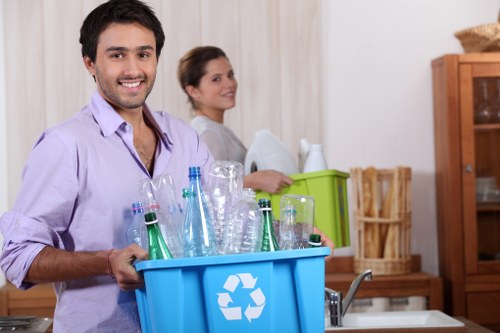
Our measurable goal is a 75% recycling and reuse target for all flat clearance waste by 2028, rising to 85% by 2032 as infrastructure improves. This target covers material diverted to reuse, charity partnerships, municipal recycling streams and specialist recyclers for bulky items and difficult materials. We break down performance by material (wood, metal, textiles, WEEE, glass, paper/cardboard) and publish aggregated results internally so each job contributes to continual improvement.We coordinate with the Royal Borough’s approach to waste separation: encouraging residents and clients to separate dry recyclables (paper, cardboard, plastics), glass, and food waste where applicable, and to make use of community small electricals and textiles collections. Where the borough operates kerbside food and mixed recycling schemes, our crews ensure items are pre-sorted so they enter the correct municipal or commercial stream.
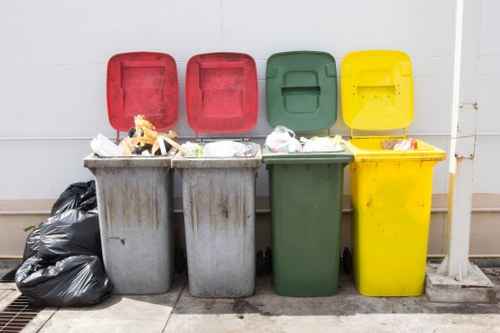 Operationally we rely on a network of local transfer stations and processing points — borough transfer facilities and neighbouring West London hubs — to minimise transport emissions and speed up onward recycling. This local-first routing reduces turnaround, lowers refuse vehicle mileage, and optimises the use of local sorting centres that accept separated loads.
Partnerships with charities and community reuse
Partnerships are central to our model. We work with local and national charities, furniture reuse organisations and community hubs to rehome good-condition items instead of sending them to recycling or landfill. Donations of furniture, kitchenware, books and small household items are coordinated with partners who provide social benefit and keep functional items in use.Examples of our collaborative processes include:
- Pre-sorting at clearance so charity-suitable items are segregated and uplifted for reuse.
- Timely collections to local furniture re-use charities to avoid storage bottlenecks.
- Special handling of electricals and white goods to ensure safe refurbishment or proper recycling.
We prioritise reuse over recycling where items remain functional, and we use charity partnerships to extend the lifecycle of household goods — turning clearances into community benefit rather than waste removal alone.
Our crews are trained to identify items that should go to specialist recyclers (e.g., mattresses, WEEE, hazardous materials) rather than assuming everything is general waste. This reduces contamination in recycling streams and improves the overall recycling percentage. We also run internal audits and job-by-job recovery logs so that every clearance contributes to learning and process refinement.
 Sustainability goes beyond recycling percentages. We operate a fleet of low-carbon vans — hybrid and fully electric vehicles where route and payload allow — to transport materials to local transfer stations and charity partners. These low-emission vehicles are used for short urban hops around Kensington and adjacent boroughs to cut emissions and noise in built-up areas. Where electric vehicles are not yet practical for heavy loads, we deploy modern Euro-6 engines and carefully planned trip consolidation to keep carbon intensity low.
 As part of our operational transparency we present clear recovery breakdowns for each clearance: percentages allocated to reuse, municipal recycling, specialist recycling and residual disposal. We monitor contamination rates, vehicle miles, and partner throughput so that improvements in one area (for instance, better on-site sorting) directly improve overall sustainability outcomes.
Education and community engagement are part of what makes a true sustainable rubbish area. Our teams provide succinct, practical advice to residents on how to separate waste for better outcomes, and we coordinate collections with local charity pick-up schedules to maximise reuse opportunities. We support community clear-outs, estate refurbishments and smaller tenancy turnovers with the same reuse-first ethos.
To summarise, Flat Clearance Kensington offers a robust, measurable approach to eco-friendly flat clearances: clear recycling targets, close coordination with local transfer stations, strong charity partnerships for reuse, and a modern fleet of low-carbon vans. Every job is an opportunity to lower waste, reduce emissions and create local social value.
We are committed to continuous improvement and to working with borough initiatives and community partners to create a cleaner, greener Kensington — where flat clearance services support circular economy goals and sustainable waste management across the neighbourhood.